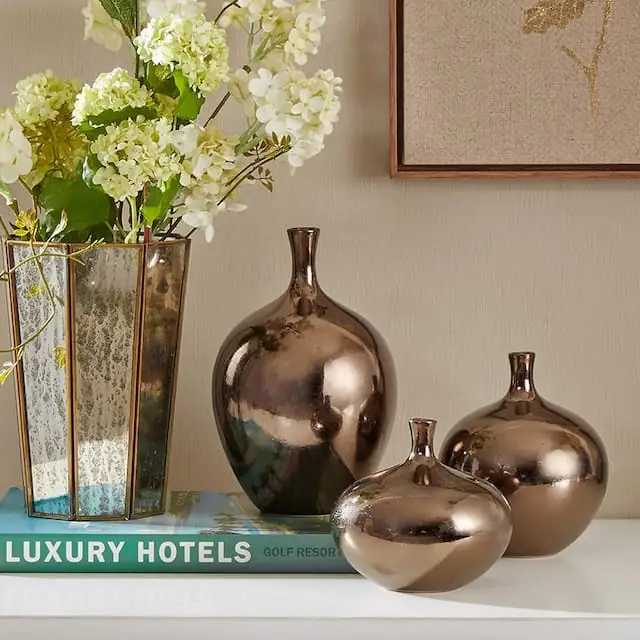
Begin with the place it will live
Decide whether the vase belongs on a dining table, console, shelf or floor before comparing styles. Measure the available width, depth and height, including nearby shelves and sightlines. A dining arrangement should allow people to see one another; a narrow shelf needs a base that fits completely on its surface. Make a paper outline of the footprint and use a box to judge the height. These simple checks reveal scale more reliably than a cropped product photograph.
Match the opening to the arrangement
The neck controls how stems spread. A narrow opening may support a few long stems, while a wider mouth gives a mixed arrangement more room. Ask for opening diameter and usable depth, not just overall height. Think about the arrangement after it is filled: long branches and heavy flower heads can change the balance. Avoid buying a very small base solely because the silhouette looks elegant.
Separate appearance from function
Glass makes water visible, so the appearance of stems and cleaning becomes part of the display. Glazed ceramic can conceal the arrangement inside, but a glazed-looking exterior does not establish a watertight interior. Porous or decorative vessels may be intended for dried stems only. Metal finishes and painted surfaces can have their own limits. Ask the seller to confirm whether fresh flowers and water are permitted, and whether a removable liner is required or supplied.
Inspect the details that photographs hide
- Check the underside for rough areas and ask whether protective feet are included.
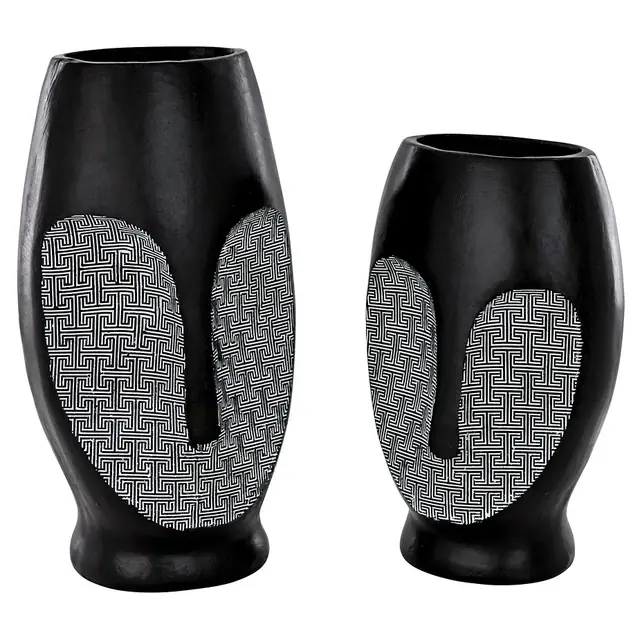
- Confirm whether the listed size describes one vase or a complete set.
- Request the weight and a clear image of the opening and base.
- For handmade pieces, ask which differences in glaze, colour and dimensions are expected.
Make the practical choice
A vase is easier to enjoy when its interior can be reached for cleaning and its weight is comfortable to handle. Follow the maker's instructions rather than assuming dishwasher suitability. Check for leakage on a protected surface before placing a water-filled vase on valuable furniture. Our editorial preference is for a clear specification, a stable footprint and a shape that suits the intended flowers. An unusual finish is a benefit only when the vessel also works for its everyday role.
Community comments 0
Be the first to share a considered opinion about this piece.